English · Ebook
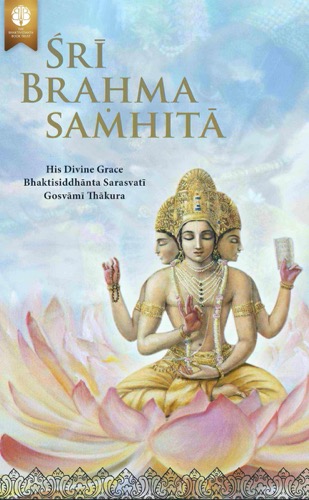
Śrī Brahma-saṁhitā
Digital purchase. Your access code will be sent by email. No physical product is shipped.
- One secure checkout
- Personal email delivery
- Support at support@krishnabookspov.com.au

English · Ebook
Digital purchase. Your access code will be sent by email. No physical product is shipped.
Know what you are choosing
Read the overview, meet the contributors and browse the contents before ordering.
The origins of Śrī Brahma-saṁhitā are lost to antiquity. According to Vedic tradition, these “Hymns of Brahmā” were recited millennia ago by the first being in the universe. The text entered the written canon of Gauḍīya Vaiṣṇavism in the sixteenth century, when it was discovered in the manuscript library of an ancient temple in what is now Kerala state, in South India.
The essence of Śrī Brahma-saṁhitā is the beautiful prayers Lord Brahmā offers to Śrī Kṛṣṇa, the Supreme Personality of Godhead, after his enlightenment. There is nothing vague about Brahmā’s description of the Supreme Being and His abode – no dim, nihilistic nothingness, no blinding bright lights, no wispy, dreamy visions of harps and clouds. Rather, Brahmā describes a vibrant, luminous transcendental and sublimely variegated spiritual landscape populated by innumerable blissful, eternally liberated souls reveling in spiritual cognition, sensation, and emotion – all in relationship with the all-blissful, all-attractive Supreme Person.

Śrīla Bhaktisiddhānta Sarasvatī Ṭhākura (1874–1937) was a prominent teacher, scholar, and philosopher in the Gauḍīya Vaiṣṇava line. He was born in Jagannath Puri, Orissa, as the son of Śrīla Bhaktivinoda Ṭhākura, a recognized Bengali Gauḍīya Vaiṣṇava philosopher and teacher. Śrīla Bhaktisiddhānta Sarasvatī received both a Western and a traditional Indian education, and gradually established himself as a leading intellectual among the Bhadralok of colonial Calcutta, earning the title Siddhānta Sarasvatī (“the pinnacle of wisdom”). In 1918, he accepted the renounced order and began his mission by establishing the first branch of the Gauḍīya Maṭha, which soon developed into a dynamic missionary and educational institution with sixty-four branches across India along with three centers abroad (in Burma, Germany, and England). The Maṭha propagated the teachings of Gauḍīya Vaiṣṇavism, or /caitanya bhakti/, through periodicals, books of the Vaiṣṇava canon, and numerous public programs. Bhaktisiddhānta himself was known for his outspoken speaking and writing style, and for establishing the personalist school of /kṛṣṇa-bhakti/. The Gauḍīya mission became a powerful movement for the reform of Vaiṣṇavism in Bengal.
Śrīla Bhaktisiddhānta Sarasvatī Ṭhākura wrote numerous books, commentaries, and articles. His commentary on /"Śrī Brahma-saṁhitā"/ is filled with deep spiritual understanding of the subject matter and filled with descriptions of the glories of Śrī Kṛṣṇa.